
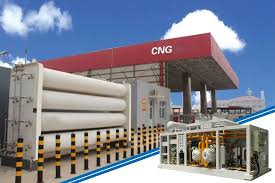

This feasibility study examines the viability of establishing a Compressed Natural Gas (CNG) filling station in Nigeria. CNG is gaining traction as a clean and cost-effective alternative fuel, particularly for transportation and industrial applications. The study evaluates market demand, investment requirements, operational considerations, and financial projections to assess the feasibility of the CNG filling station venture.
Market Opportunity:
Nigeria faces rising fuel costs and environmental concerns. Compressed Natural Gas (CNG) offers a cleaner and potentially more affordable alternative to traditional fuels for vehicles. Growing government support for CNG adoption, coupled with an existing network of gas pipelines, presents a promising opportunity for CNG filling stations.
The establishment of a CNG filling station involves capital investment in infrastructure, equipment, safety measures, regulatory compliance, and operational setup. Financial projections are developed to determine the initial investment outlay, operating expenses, revenue potential, and return on investment (ROI) over a specified period.
Market Demand and Competition: Analysis of market demand includes assessing the current and projected uptake of CNG by various sectors, competition from existing fuel like PMS & AGO, pricing dynamics, customer preferences, and government incentives or policies supporting CNG adoption.
In conclusion, the feasibility study provides insights into the opportunities and challenges of establishing a CNG filling station in Nigeria. The transition to cleaner energy solutions aligns with global sustainability goals and presents a promising investment avenue. Strategic planning, regulatory compliance, operational excellence, market positioning, and financial prudence are essential for a successful CNG filling station venture in Nigeria.
Market Opportunity:
Nigeria faces rising fuel costs and environmental concerns. Compressed Natural Gas (CNG) offers a cleaner and potentially more affordable alternative to traditional fuels for vehicles. Growing government support for CNG adoption, coupled with an existing network of gas pipelines, presents a promising opportunity for CNG filling stations.
The establishment of a CNG filling station involves capital investment in infrastructure, equipment, safety measures, regulatory compliance, and operational setup. Financial projections are developed to determine the initial investment outlay, operating expenses, revenue potential, and return on investment (ROI) over a specified period.
Market Demand and Competition: Analysis of market demand includes assessing the current and projected uptake of CNG by various sectors, competition from existing fuel like PMS & AGO, pricing dynamics, customer preferences, and government incentives or policies supporting CNG adoption.
In conclusion, the feasibility study provides insights into the opportunities and challenges of establishing a CNG filling station in Nigeria. The transition to cleaner energy solutions aligns with global sustainability goals and presents a promising investment avenue. Strategic planning, regulatory compliance, operational excellence, market positioning, and financial prudence are essential for a successful CNG filling station venture in Nigeria.
Executive Summary
Introduction
2.1 Purpose
Investment Decision Factors
3.1 Key Success Factors
3.2 Opportunities
3.3 Threats
Project Description
4.1 Opportunity Rationale
4.2 Project Brief
4.3 Introduction of CNG
4.4 Proposed Legal Status
4.5 Project Cost
4.6 Viable Economic Size
4.7 Proposed Capacity
4.8 Proposed Location
4.9 CNG Policy
Market Analysis 5.1 Target Customers
5.2 Market Demand
5.3 Market Supply
5.4 Industrial Growth
Regulatory Requirements & Licenses 6.1 Licenses
6.2 Certificates
6.3 Involvement of International Oil Companies (IOCs)
6.4 Incentives
6.5 Tax Considerations 6.5.1 Sales Tax
6.5.2 Custom Duty
6.5.3 Regulatory Body Requirements
6.5.3.1 Quality Certificate
6.5.3.2 List of Equipment
6.5.3.3 Income Tax on Imported CNG Equipment
6.6 Income Tax
Project Implementation
7.1 Project Cost Breakdown
7.2 Project Financing
7.3 Project Details 7.3.1 Location
7.3.2 Land
7.3.3 Building
7.3.4 Material Inputs
7.3.5 CNG Equipment
7.3.6 Suppliers
7.3.7 Furniture & Fixtures
7.3.8 Office Equipment
7.3.9 Man Power Requirement
Financial Projections (Separate Report) 8.1 Basis for Financial Projection 8.1.1 Inflation Rate
8.1.2 Revenue Assumption 8.1.2.1 No. of CNG Cars
8.1.2.2 Gas per Vehicle
8.1.3 Depreciation on Assets
8.2 Financial Analysis Results 8.2.1 Accounting Profit
8.2.2 Taxable Profit
8.2.3 First Year Allowance
8.2.4 Multiple Ship Allowance
8.2.5 Amortization of Preliminary Expenses
8.2.6 Working Capital 8.2.6.1 Account Receivables
8.2.6.2 Allowances to employees
8.2.6.3 Accrued Utilities & power expenses
8.2.6.4 Accounts payable
8.2.6.5 Sales tax Payable
8.2.7 Sales tax
8.3 Alternative Investment Opportunity
Conclusion
Introduction
2.1 Purpose
Investment Decision Factors
3.1 Key Success Factors
3.2 Opportunities
3.3 Threats
Project Description
4.1 Opportunity Rationale
4.2 Project Brief
4.3 Introduction of CNG
4.4 Proposed Legal Status
4.5 Project Cost
4.6 Viable Economic Size
4.7 Proposed Capacity
4.8 Proposed Location
4.9 CNG Policy
Market Analysis 5.1 Target Customers
5.2 Market Demand
5.3 Market Supply
5.4 Industrial Growth
Regulatory Requirements & Licenses 6.1 Licenses
6.2 Certificates
6.3 Involvement of International Oil Companies (IOCs)
6.4 Incentives
6.5 Tax Considerations 6.5.1 Sales Tax
6.5.2 Custom Duty
6.5.3 Regulatory Body Requirements
6.5.3.1 Quality Certificate
6.5.3.2 List of Equipment
6.5.3.3 Income Tax on Imported CNG Equipment
6.6 Income Tax
Project Implementation
7.1 Project Cost Breakdown
7.2 Project Financing
7.3 Project Details 7.3.1 Location
7.3.2 Land
7.3.3 Building
7.3.4 Material Inputs
7.3.5 CNG Equipment
7.3.6 Suppliers
7.3.7 Furniture & Fixtures
7.3.8 Office Equipment
7.3.9 Man Power Requirement
Financial Projections (Separate Report) 8.1 Basis for Financial Projection 8.1.1 Inflation Rate
8.1.2 Revenue Assumption 8.1.2.1 No. of CNG Cars
8.1.2.2 Gas per Vehicle
8.1.3 Depreciation on Assets
8.2 Financial Analysis Results 8.2.1 Accounting Profit
8.2.2 Taxable Profit
8.2.3 First Year Allowance
8.2.4 Multiple Ship Allowance
8.2.5 Amortization of Preliminary Expenses
8.2.6 Working Capital 8.2.6.1 Account Receivables
8.2.6.2 Allowances to employees
8.2.6.3 Accrued Utilities & power expenses
8.2.6.4 Accounts payable
8.2.6.5 Sales tax Payable
8.2.7 Sales tax
8.3 Alternative Investment Opportunity
Conclusion
$120 (N150,000)
Get your conditional loan offer: admin@fundxperts.com
Contact: admin@fundxperts.com